Thinking About Getting an IUD? Read This First
WELLNESS
Thinking About Getting an IUD? Read This First
OCTOBER 30, 2026 • 10 MIN READ
Hormonal vs. Copper, Insertion, Pain, Periods, Sex, Side Effects and the Things Women Wish They Knew Before Getting One
An IUD can sit quietly inside your uterus for years, preventing pregnancy without a daily pill, monthly prescription or last-minute calculation. That simplicity is exactly why so many women consider one. But between the horror stories about insertion and the friend who says hers changed her life, making the decision can feel surprisingly complicated.
The truth is less dramatic and far more useful: there isn’t one universal IUD experience. Copper and hormonal IUDs work differently, periods can change, insertion deserves an honest conversation about pain, and side effects vary. Here’s what is actually worth knowing before deciding what belongs in your body.
Copper or Hormonal? This Is the First Decision That Actually Matters
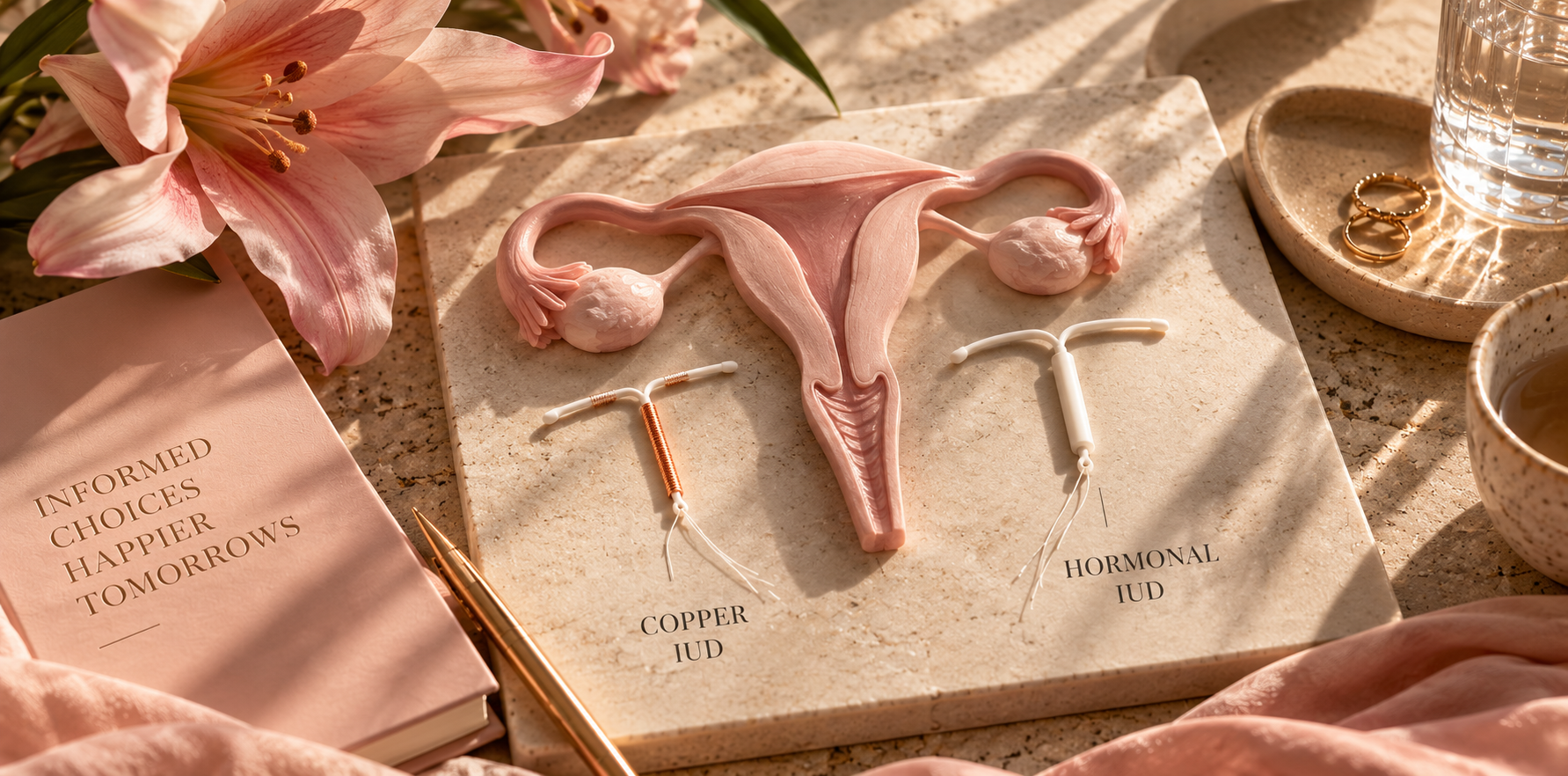
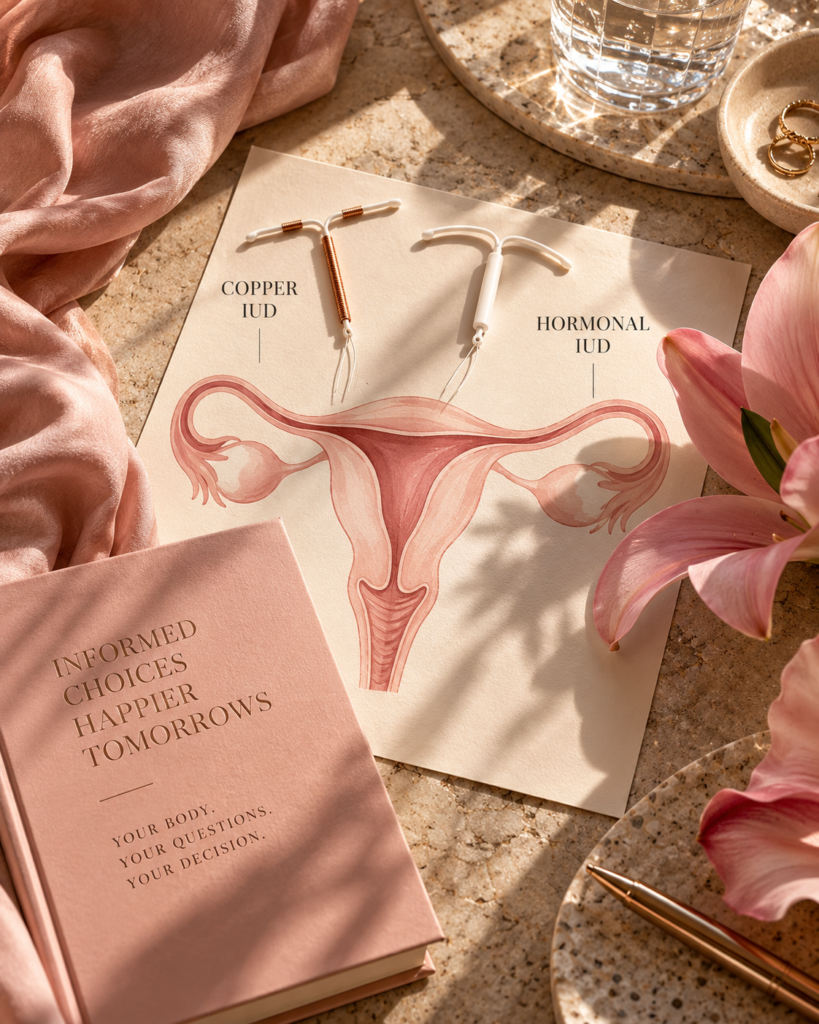
“IUD” is often used as though it describes one thing, but there are two important categories. A copper IUD contains no hormones and prevents pregnancy through copper released inside the uterus. Hormonal devices release a progestogen called levonorgestrel; in the UK, you’ll often see these called an IUS or hormonal coil. Both are long-acting, reversible and more than 99% effective, but your everyday experience can be quite different. Copper IUDs can make periods heavier, longer or more painful, especially during the first few months.
Hormonal IUDs often do the opposite: bleeding usually becomes lighter over time, and periods may eventually stop. Depending on the device, protection can last several years. So don’t choose simply because a friend loves hers. Think about your priorities: Do you strongly prefer hormone-free contraception? Are your periods already heavy or painful? Would lighter periods be a benefit? The best IUD isn’t the most popular one. It’s the one whose trade-offs make sense for your body and your life.
Let’s Talk About IUD Insertion, Without Minimizing It or Terrifying You
Yes, IUD insertion can hurt. But “Does getting an IUD hurt?” doesn’t have one honest universal answer. Some people experience manageable cramping; others experience significant pain. The actual fitting is generally brief: a clinician places the small T-shaped device through the cervix into the uterus, and period-like cramps and spotting can continue afterward. What deserves more attention is pain management.
ACOG now recommends that pain-control options be discussed and offered for in-office gynecologic procedures; local anesthetics such as lidocaine may reduce pain during IUD insertion. That means you do not have to arrive at your appointment assuming you should simply tolerate whatever happens.
Ask beforehand: What pain relief do you offer? What will each stage feel like? Can we pause if I need to? Anxiety around a procedure can also amplify the experience, which makes good communication, not dismissing fear, important. Being informed isn’t being difficult. When somebody is placing a device inside your uterus, you are allowed to ask exactly how your comfort will be handled.
What Is It Actually Like to Live With an IUD? Periods, Sex, Strings and Side Effects
After insertion, the bigger question becomes: Will I notice it? Usually, an IUD simply becomes background contraception. Two thin threads extend through the cervix into the top of the vagina so the device can be checked and later removed; a partner normally should not feel them during sex. Your bleeding pattern, however, may take time to settle. Spotting and irregular bleeding are common during the first three to six months with hormonal IUDs before bleeding generally decreases.
Copper IUD users can experience heavier or prolonged bleeding initially. Some hormonal-IUD users report acne, headaches, breast tenderness or mood changes, although the NHS notes there is not enough evidence to establish that the IUS causes these symptoms. That distinction matters: your symptoms deserve attention without every change automatically being blamed on contraception.
And remember what an IUD doesn’t do: it does not protect against sexually transmitted infections, so condoms can still matter. The psychological benefit for some women is simpler, the contraception requires remarkably little daily thought.
Removal, Fertility and the Red Flags You Should Never Ignore
An IUD isn’t a contract with your uterus. If you dislike it, want another contraceptive method or decide you want to become pregnant, a trained clinician can remove it. Fertility can return immediately after removal, IUDs do not require months of “detoxing” before your body is capable of pregnancy. Serious complications are uncommon, but knowing the warning signs matters. Seek medical advice promptly for severe or worsening lower-abdominal pain, fever, unusual or foul-smelling discharge, very heavy bleeding, suspected pregnancy, or if you can no longer feel the threads or they suddenly feel different.
Rare complications include the device moving or coming out, pelvic infection around the time after insertion, damage to the uterus, and ectopic pregnancy in the rare event the method fails. None of this means you should be frightened of an IUD. It means informed contraception should include more than effectiveness statistics. You deserve to know what’s normal, what isn’t and that choosing removal because something isn’t working for you is a completely legitimate medical decision. nhs.uk
Before you decide, ask yourself one better question: not “Is an IUD good or bad?” but “Is this the right contraceptive method for my body, my periods, my priorities and my life?” A good contraception decision isn’t the one everyone else approves of. It’s the one you can make with accurate information, realistic expectations and a healthcare professional willing to listen.
“You don’t need to become an expert on contraception to make an empowered decision. You need good information, a healthcare professional who listens, and the confidence to remember one thing: no one will ever live inside your body but you. Choose accordingly.“
JOIN THE NEW ME LETTER
Your next chapter starts here.
Join thousands of women becoming the highest version of themselves, inside and out.