
Leaving Money in the Bank Doesn’t Mean You’re Saving Money

WEALTH
Leaving Money in the Bank Doesn’t Mean You’re Saving Money
OCTOBER 23, 2026 • 10 MIN READ
Where You Keep Your Savings Matters Almost as Much as How Much You Save
You transfer money into your savings account every month. You watch the balance climb. You avoid unnecessary purchases. Financially responsible? Absolutely. But there is an uncomfortable question many of us never ask: what is that money doing once it gets there?
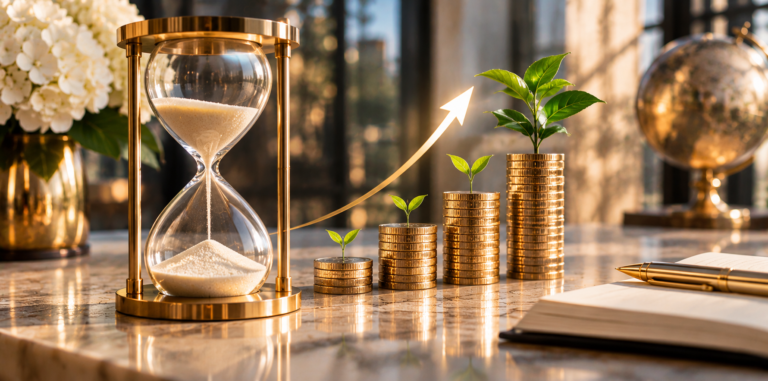
Saving is not simply the act of not spending. If thousands sit for years in an account earning almost nothing while prices rise, your balance may look reassuring while its purchasing power quietly weakens. At the same time, investing every spare euro isn’t automatically smarter either.
Good money management begins with understanding that different money has different jobs. The goal isn’t to make every euro work as hard as possible. It’s to make sure every euro is working for the life you’re building.
The Number in Your Account Is Not the Same as Its Real Value
Imagine you have $10,000 sitting in an account paying no interest. A year later, the screen still says $10,000, so emotionally it feels as though nothing has changed. But if the cost of living has increased during that year, those dolars may buy less. This is the effect of inflation on savings: your money can remain numerically intact while losing purchasing power. Now imagine instead that some of your cash is held in an interest-paying savings account. Interest can help offset that erosion, although the result depends on the rate, inflation, taxes and fees.
This doesn’t mean chasing whichever bank advertises the biggest percentage. It means knowing your numbers. Check the interest rate on your savings, whether there are account fees, withdrawal conditions and applicable deposit protection. One surprisingly useful financial habit is simply asking: What return is my money earning right now? If you don’t know, start there. Saving intentionally begins when you stop treating the bank account as a financial waiting room.
Give Your Money a Job Before You Decide Where It Belongs
One of the biggest mistakes in personal finance is treating all savings as one giant pile. Your emergency fund and money intended for retirement do not have the same purpose, so they shouldn’t automatically have the same strategy.
Start by dividing your savings according to when you might need them. Money for unexpected expenses needs accessibility and stability. Money for a holiday, car, home deposit or other goal within the next few years usually needs to remain relatively stable too. But money you genuinely won’t need for many years has a longer time horizon and may potentially be invested, depending on your circumstances and tolerance for risk.
Investing offers the possibility of growth but also the possibility of losses; returns are never guaranteed. The useful question isn’t simply, “Where can I get the highest return?” Ask instead: “When will I need this money, and what needs to be true when that moment arrives?” Purpose comes before product. That’s what turns random saving into an actual financial strategy.
The Comfort of Cash Can Quietly Become a Financial Habit
There is a psychological reason leaving everything in cash can feel so good: you can see it. $20,000 in a bank account feels concrete, available and reassuring. Investing can feel considerably less comfortable because values fluctuate and the future is uncertain. That doesn’t make keeping cash wrong. A healthy cash reserve can provide enormous financial security. The problem begins when feeling safe becomes the only financial strategy you have.
Some women become excellent at accumulating money but never decide what the money beyond their short-term needs is supposed to accomplish. Others rush into investments because they’re frightened of “missing out.” Neither extreme is particularly thoughtful. Instead, establish the amount of accessible cash that makes sense for your circumstances, identify your medium-term goals, and then examine what remains. If some money has no purpose beyond “I just leave it there,” that’s worth investigating. Financial confidence isn’t taking more risk. It’s understanding why you’re taking or avoiding it.
Build a System Where Saving Eventually Becomes Wealth Building
The most useful shift is moving from “How much have I saved?” to “What is my money building?” Start with a simple financial map. Write down your accessible cash, savings accounts, debts, investments and retirement assets. Then calculate your essential monthly expenses and decide what emergency reserve suits your income stability, responsibilities and circumstances.
Next, attach a goal and approximate date to the rest of your savings. Perhaps one portion is for next year’s travel, another for a future home and another is genuinely long-term money. Only then investigate appropriate accounts, deposits or diversified investments for each objective, considering risk, fees, taxes and accessibility.
Automating transfers can make the system easier to maintain, but review it periodically rather than assuming yesterday’s bank account remains today’s best option. If investing feels confusing, start by learning before buying or seek appropriately regulated financial advice. The goal isn’t to become obsessed with money. It’s to build a system in which your money gradually creates more security, independence and choice.
Saving is powerful. Keeping accessible cash is necessary. Investing can be useful. None of them is automatically the “right” answer without knowing what the money is for. So the next time you open your banking app, don’t only feel proud of the balance and you should feel proud.
Ask one more question: Is this money in the right place for what I want it to do? Because financial independence isn’t built simply by becoming good at not spending. It’s built by understanding how today’s money can protect today’s life while helping to create tomorrow’s.
Your money shouldn’t simply prove how much you’ve saved. It should quietly expand what your future allows you to choose.
“One day, the money you’re learning to manage today may become the reason you can say yes, say no, walk away, begin again or simply choose what you truly want.”
JOIN THE NEW ME LETTER
Your next chapter starts here.
Join thousands of women becoming the highest version of themselves, inside and out.