
The Everyday Mistakes Quietly Speeding Up Aging
WELLNESS
The Everyday Mistakes Quietly Speeding Up Aging
JULY 31, 2026 • 8 MIN READ
The surprising daily habits that age your skin, brain, hormones, and body faster. What to do instead.
When most people think about aging, they blame birthdays. In reality, aging is influenced far more by the choices you make every day than by the number of candles on your cake. Science now shows that your skin, brain, hormones, metabolism, muscles, and even your cells respond continuously to your lifestyle. Poor sleep, chronic stress, inactivity, excessive sugar, loneliness, dehydration, and even negative thinking can accelerate biological aging long before wrinkles appear.
The encouraging news? Many of these effects are reversible. Small daily habits have the power to slow inflammation, protect your hormones, strengthen your brain, improve your energy, and help you feel younger for much longer. The goal isn’t to look twenty forever. It’s to age healthier, stronger, and with more vitality than most people ever imagine possible.
Chronic Stress Is Aging Your Body Faster Than You Think
Stress isn’t simply an emotional experience. It’s a biological event. Whenever your brain perceives constant pressure, it releases cortisol, your primary stress hormone. While cortisol is essential in short bursts, chronically elevated levels increase inflammation, weaken collagen production, disrupt sleep, impair memory, and even accelerate the shortening of telomeres, the protective caps at the ends of your chromosomes associated with cellular aging.
Research has linked long-term psychological stress with faster biological aging and increased risk of cardiovascular disease, metabolic disorders, and cognitive decline. Many people focus entirely on expensive skincare while ignoring the biggest factor influencing how their skin ages from within.
Reducing stress doesn’t require escaping your life. Daily walks, deep breathing, resistance training, spending time in nature, meaningful relationships, and consistent sleep all help lower cortisol naturally. The healthiest-looking people often aren’t the ones with the most products. They’re the ones whose nervous systems spend more time feeling safe than surviving.
Poor Sleep Is Stealing Your Youth Every Night
There is no anti-aging cream that can replace quality sleep. During deep sleep, your body repairs damaged tissues, produces growth hormone, regulates immune function, balances blood sugar, strengthens memory, and stimulates collagen production.
When sleep becomes consistently inadequate, the body shifts into repair deficit. Inflammation rises. Insulin sensitivity worsens. Appetite hormones become disrupted, increasing cravings for sugary foods. Skin becomes dull, fine lines appear more noticeable, and recovery slows dramatically.
Sleep deprivation has also been associated with increased risks of Alzheimer’s disease, obesity, depression, and cardiovascular illness. Aim for seven to nine hours of consistent, high-quality sleep while maintaining regular bedtime and wake-up times. Protecting your evening routine, limiting bright screens, reducing caffeine later in the day, and creating a calm environment may be one of the most powerful anti-aging investments you’ll ever make. Beauty sleep isn’t a myth. It’s biology.
Sitting Too Much Ages More Than Your Muscles
Exercise isn’t just about burning calories. Movement communicates directly with nearly every system in your body. Long periods of sitting reduce circulation, decrease insulin sensitivity, weaken muscles and bones, impair posture, slow metabolism, and contribute to chronic inflammation.
Over time, inactivity accelerates many of the same biological changes commonly associated with aging. Strength training deserves particular attention. After the age of 30, adults naturally begin to lose muscle mass, a process known as sarcopenia. Maintaining muscle through resistance exercise helps preserve metabolism, improve balance, protect bone density, regulate blood sugar, and support healthy aging.
Daily movement doesn’t need to be extreme. Walking after meals, climbing stairs, stretching regularly, carrying groceries, and performing two or three weekly strength sessions create remarkable long-term benefits. One of the strongest predictors of healthy aging isn’t how much you weigh. It’s how much muscle and mobility you maintain.
The Hidden Habits That Quietly Age You Every Day
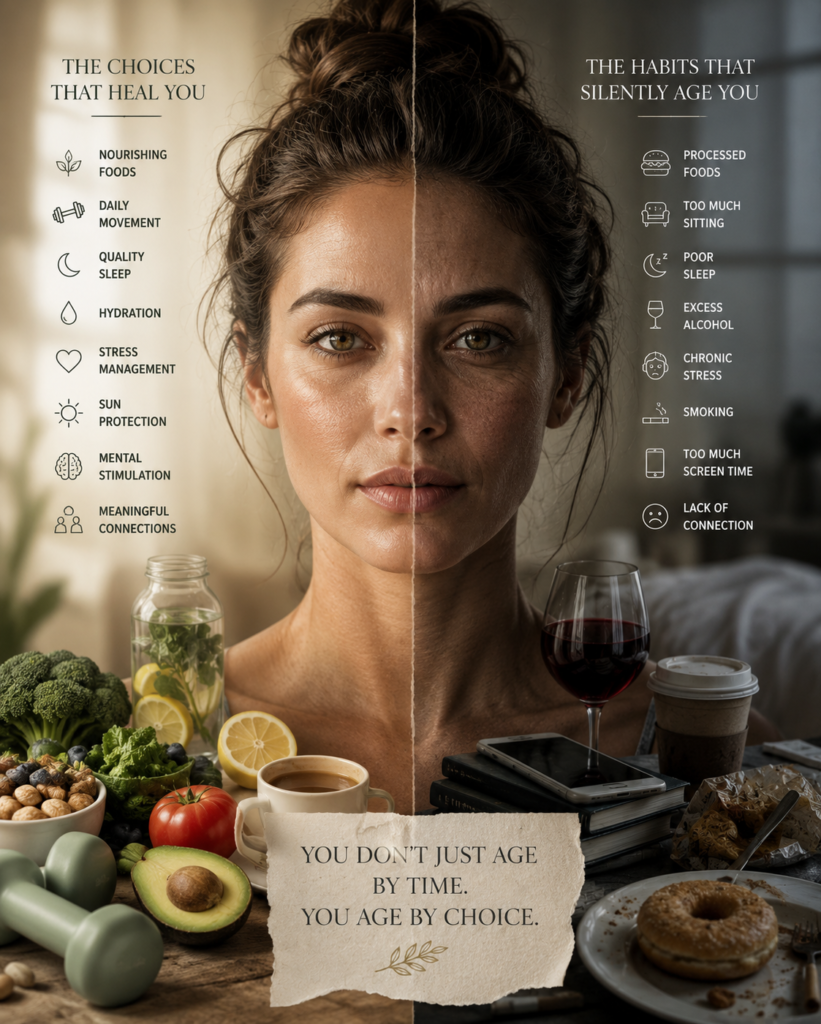
Many of the biggest contributors to aging seem harmless because they happen gradually. Drinking too little water. Eating highly processed foods every day. Rarely eating enough protein. Excessive alcohol. Smoking. Skipping sunscreen. Living in constant social isolation. Never challenging your brain. Remaining indoors with little natural daylight.
Even persistent negative thinking has been linked to higher stress, increased inflammation, and poorer physical health over time. Healthy aging isn’t created by one miracle supplement. It’s built through hundreds of ordinary choices repeated consistently.
Prioritize colorful fruits and vegetables, lean protein, healthy fats, hydration, regular movement, meaningful social connection, mental stimulation, and daily sun protection. The body responds remarkably well when given the right conditions. Your future health isn’t decided in one dramatic moment. It’s quietly written by the habits you practice today. Every healthy decision is an investment in the person you’ll become tomorrow.
Healthy aging isn’t built by one perfect decision; it’s created by hundreds of ordinary ones. Every nourishing meal, every workout, every good night’s sleep, and every moment you choose to care for yourself becomes an investment in your future. Your body is always listening to the habits you repeat.
«Don’t measure your life by how many years you live. Measure it by how much strength, vitality, joy, and purpose you carry into every one of them.»
JOIN THE NEW ME LETTER
Your next chapter starts here.
Join thousands of women becoming the highest version of themselves, inside and out.